Rhythmbox is a music playing application for GNOME. Download3k has downloaded and tested version 3.4.4 of Rhythmbox on 10 Jan 2020 using only the best antivirus engines available Today. We have found it to be clean of any form of badware (viruses, spyware, adware, etc.). 8/10 (6 点) - Linux Rhythmboxを無料ダウンロード Rhythmboxをインストールすれば好きな音楽リストを聴くだけでなくインターネットを通じてラジオも聴くことが出来ます、是非このアプリケーションをダウンロードしてみて。.
Contents
|
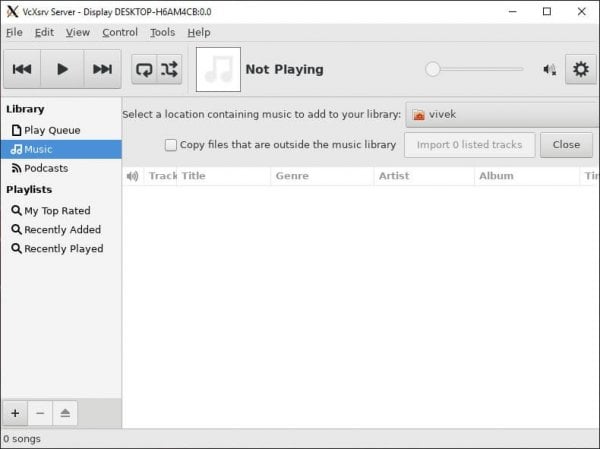
Rhythmbox is GNOME’s default music player. Inspired by Apple’s iTunes, it is simple to use and meets most users' needs. Rhythmbox includes such features as playlist support, iPod integration, podcast playback, and support for streaming audio. In addition, users are able to browse the online (and digital rights management-free) music stores Magnatune and Jamendo.
Play Modes
Adding Songs to the Play Queue
To add songs to the Play Queue, select either entire artists/albums or individual songs, then either right click and select Add to Play Queue or drag and drop onto the Play Queue list under the Library heading in the Side Pane.
Shuffle and Repeat
While on your Music library, if you make a selection of Artists/Albums or Songs and click Repeat or Random it will only repeat and/or shuffle the selection.
Playlists
Static Playlists
Static Playlists are playlists containing songs manually added from the Library by the user.
Creating a New Static Playlist
Press CTRL+N or select Music > Playlist > New Playlist
- Type the name for the new playlist and press Enter
- Drag and drop songs from the Library onto the playlist's name in the left pane. You may also add songs to the playlist by selecting which songs in the Library you wish to include, then right click on the selections, select Add to Playlist, and select the playlist to add the songs to.
To delete songs from a playlist, select the songs in the playlist, then right click and select delete.
Automatic Playlists
Automatic Playlists are playlists that automatically include or exclude songs from the Library based on a user-defined set of criteria.
Creating a New Automatic Playlist
From the Music menu, select Playlist > New Automatic Playlist
- Enter your desired playlist criteria using the drop down menus and text boxes, then select the New button
- Click on the newly created playlist under Playlists in the Side Pane and give the playlist a name
To edit the playlist, either:
- Right click on the playlist name and select Edit; or
Select the playlist, then under the Music menu, select Playlist > Edit
Party Mode
Party mode sets Rhythmbox to cover the desktop/panels (full screen) and queues any selected tracks in the play queue automatically.
- From the View menu, select Party Mode
Importing Audio CDs
To import an audio CD's tracks onto your computer and into Rhythmbox's Library, insert the CD into your computer. The CD's icon will then appear under Devices in the Side Pane. To then import the CD's tracks, either:
- Select the Extract button on the menu bar; or
- Right click on the CD's name, and select Extract to Library
The CD's track names and other basic information should be automatically entered if there is an Internet connection present. If the track information is not automatically entered, manually enter the information by selecting the desired track or tracks, then right click and select Properties. Enter the desired information, then select Close.
Change Importing Details
/001-complete-guide-rhythmbox-2204885-dc7a7cc66f864b168df251f9f2898707.jpg "Windows")
To change the settings for importing audio CDs, such as what format to import to (ogg, mp3, flac, etc.), select from the Edit menu Preferences, then select the Music tab and change the desired details, then select Close.
Change Importing Settings
The out-of-the-box configuration of rhythmbox may be slow in extracting audio CDs. You can speed up the process by applying the following settings as integer-values withing gconf-editor:
- /apps/rhythmbox/paranoia-mode=0
- /apps/rhythmbox/read-speed=16
Creating Audio CDs
Create or select a desired playlist of songs to be placed on the audio CD. (For more on Playlists).
- Right click on the created or desired playlist and select Create Audio CD.
- Change the settings or leave them set to the default.
- Insert a blank CD into the computer.
- Click Create to burn the CD.
Last.fm Syncing
It is possible to link Rhythmbox to your last.fm account. Rhythmbox can collect information about your played songs and upload the information to your last.fm account.
Setting up Last.fm Syncing
Select Edit > Plugins
- Select the box for the Last.fm plugin, then click Configure
- Insert your Last.fm username and password
- Click Close on the Last.fm Configure and Plugin windows, then use Rhythmbox as normal. The played song information will be uploaded automatically to your Last.fm account.
You may also join the Rhythmbox Last.fm group: http://www.last.fm/group/Rhythmbox
Podcasts
Adding Feeds
Select Music > New Podcast Feed
- Enter the URL of the desired podcast, then click Add
Rhythmbox will then automatically download the most recent episode of the podcast.
Podcast Preferences
Select Edit > Preferences
- Click the Podcasts tab
You can now change the download location and how often Rhythmbox will check for new podcasts.
If you select Manually for 'Check for new episodes,' you will have to click Update All Feeds on the Podcasts library in the Side Pane to check for any new podcast episodes.
Multiple Library Directories
Having multiple library directories is useful if you have separate partitions or shared folders which contain your music.
Adding Multiple Libraries
Select Alt-F2 or Applications > Accessories > Terminal
Type 'gconf-editor' (or 'dconf-editor' for Rhythmbox versions > 2.90)
- Navigate to '/apps/rhythmbox' (or 'org/gnome/rhythmbox/rhythmdb/locations')
- On the right hand side right click on 'library_locations' and select 'Edit Key'
Click Add and type in the desired directory location (such as 'file:///home/user/Music/Shared')
Plugins
It's easy to download and install plugins that add new features to Rhythmbox. Besides the plugins that come with Rhythmbox, there's a list of third-party plugins here.
Minimizing at start up

- If you want to hide the Rhythmbox window, press CTRL+W. To bring the window back, click Rhythmbox's Notification Area icon.
- From Ubuntu Lucid Lynx (10.04) on, when launched Rhythmbox appears as an icon minimized in the notification area. If you want it to appear maximized, then open the Configuration Editor by pressing Alt+F2 (or open a terminal window by typing ALT+CTRL+T) and type:
Within the Configuration Editor, navigate to apps > rhythmbox > plugins > status-icon, then check the 'window-visible' box and close the Editor. Rhythmbox should now always appear maximized when you launch it.
Amarok - KDE's default music player
Banshee - Music manager and player (default in Ubuntu 11.04)
Exaile - GTK+-based clone of Amarok
Audacious - A media player that looks like xmms/winamp
Clementine - A music player inspired by Amarok 1.4.
Rhythmbox's official homepage - More screenshots, information, news and updates.
Restricted Formats on Ubuntu - Information on configuring support for non-free formats, like mp3.
Last.fm - A music recommendation and streaming audio site
CategorySoftwareDefaultCategorySoftwareCategoryAudio
Amarok sure inspires a lot of KDE-envy for Gnome users. Unfortunately, it doesn't fit in well in Gnome: it's written for a different desktop environment, uses a whole different toolkit, and requires a lot of extra libraries to run. Luckily, there's a great Gnome-based alternative: Rhythmbox.
According to the home page,
Rhythmbox is an integrated music management application, originally inspired by Apple's iTunes. It is free software, designed to work well under the GNOME Desktop, and based on the powerful GStreamer media framework.
Way back in the medieval ages of programming (2001), Bastien Nocera created the first release of Rhythmbox. The first release began to attract notice, which was helped by the fact that Apple had just released the first version of iTunes. Soon, Rhythmbox became a big enough project to be hosted on Gnome.org, where it moved to in 2003. By then, Jorn Baayen had taken over development. He re-wrote everything and brought it closer to the KISS (Keep It Simple Stupid) principles that Gnome is so famous for. Rhythmbox was then almost forked by Colin Walters, a Gnome programmer who disagreed with Baayen on the principle of adding internet radio. Baayen refused to accept Walters' patch, so Walters began a branch called netRhythmbox. Luckily, neither Walters or Baayen really wanted to fork, so the Baayen relented and the two merged projects. Ironically, Baayen then decided to retire from Rhythmbox and turned the leadership over to Walters.
Rhythmbox comes installed by default in Ubuntu, under the Sound and Video menu. If you use Kubuntu or Xubuntu, you'll need to install it using the command sudo apt-get install rhythmbox.
When you open Rhythmbox, you'll be presented with a simple, easy-to-use wizard that will set up Rhythmbox for you. After it has done that, Rhythmbox will launch with the Music tab open. All of your songs, with all of their ID3 tags intact, are displayed. You can also easily filter the list of songs by clicking on the Artist or Album in the above panel.
Managing and playing music (duh)
When you first try to play a non-free codec (e.g. MP3), Rhythmbox cleverly asks you if you wish to install GStreamer Ugly or GStreamer ffmpeg. After checking the appropriate codecs, Synaptic pops up and installs the software automatically. Slight problem: the Ugly codec gave the same error message. Apparently, I also had to install the Bad codecs, which didn't happen out of the box. But after I installed that, almost every unprotected codec worked. Theoretically, you should also be able to install El-Tunes (http://www.el-tunes.com/) for iTunes Music Store playback, but that's a whole different story that I won't touch on here.
Rhythmbox's interface should be very familiar to anyone who has ever used Apple's iTunes. In fact, according to Wikipedia, Rhythmbox was inspired by iTunes. But even if you haven't used iTunes before, Rhythmbox is very easy to use. You have two options for playing songs: the iTunes-style Library, or the XMMS-style play queue. With the iTunes style, you just double-click on a song in the Music tab and the song starts playing. After the song is done, Rhythmbox goes to the next song. In XMMS-style, you drag all the songs into a Play Queue playlist, which is then played. It's a nice feature if you want to listen to the hard rock Dragonforce followed by some mellow David Mallett.
Playlists are another great way to manage music in Rhythmbox. To make a new playlist, click Music → Playlist → New Playlist. Then, drag the music you want into the playlist. You can also create an automatic playlist based on ID3 tags. Click Music → Playlist → New Automatic Playlist, configure your criteria, and accept it. Your playlist will automatically update; so, if you create an automatic playlist with only five star ratings, all five star songs are automatically added to the playlist.
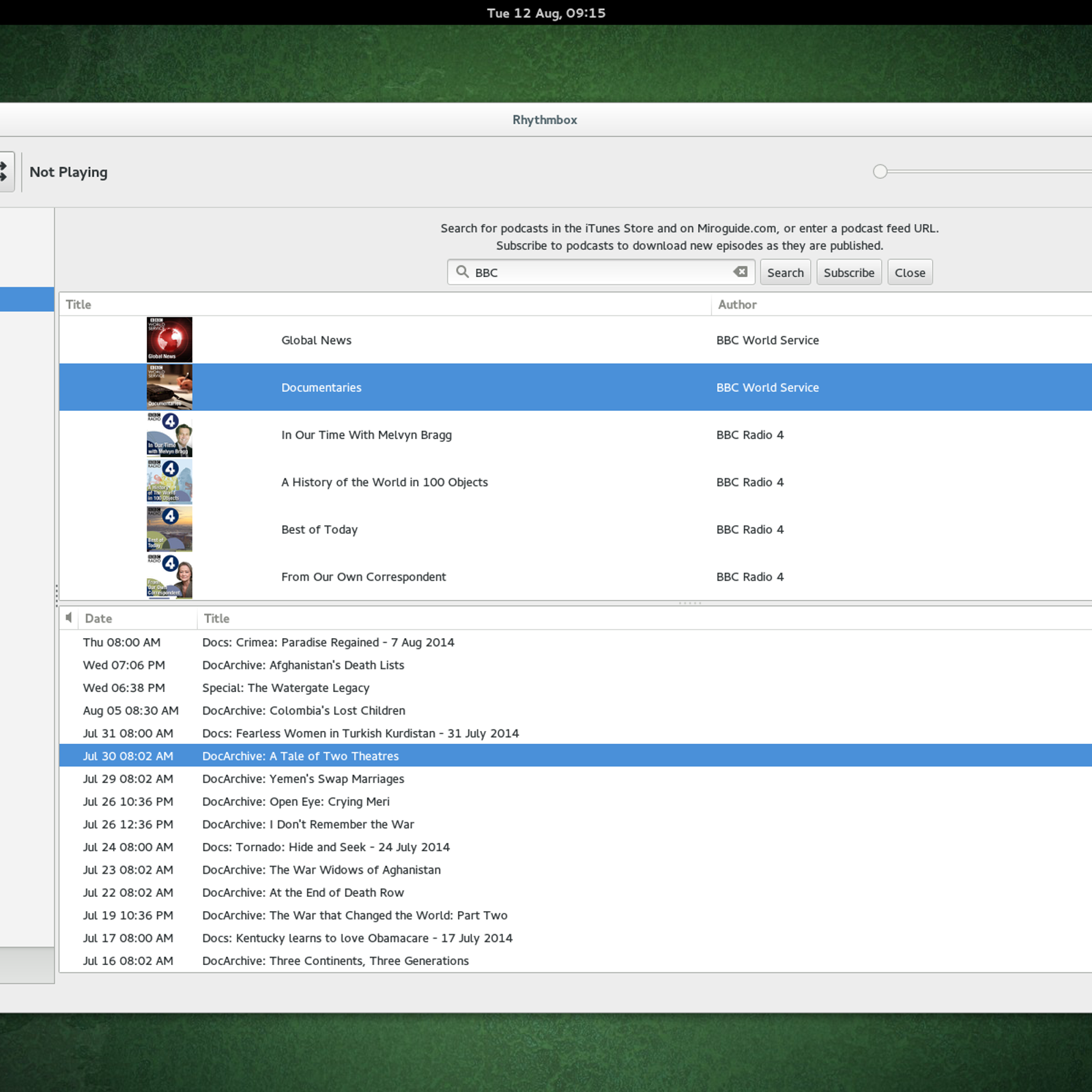
If you like podcasts, Rhythmbox is a great client. Just hit Music → Add Podcast Feed, paste the podcast URL, then go over to the Podcasts tab. All of your podcasts are listed here. To play one, add it to the queue or double click it.
Sonicstage Software Windows 10
Transferring to media devices
Rhythmbox supports iPods, MTP players, and USB mass storage devices. The first two aren't available by default, but can easily be turned on by going to Edit → Plugins and checking the appropriate boxes. After that, the media player should show up in the sidebar under the Devices tab. You can play music off of, transfer, and delete music off of the media device.
Buying music
You have two options for getting new music from the internet: Magnatune and Jamendo. After enabling the respective plugins, both are available under the Stores tab in the sidebar. Magnatune is a very unusual online music store, in that all of its music is available under the Creative Commons Attribution-NonCommercial-ShareAlike License and the price per album is determined by the buyer (between $5-$18). You can purchase the music in OGG, FLAC, WAV, MP3, or CD format using the handy toolbar buttons (or by right-clicking a song and clicking Purchase Album). My only gripe is that you can't buy a specific track, only an album.
Jamendo isn't really a store, but an online music sharing site for independent artists who don't need to make money. Unfortunately, it's a little bit of a mess. On the one hand, all the music is 100% free (CC licensed, as with Magnatune). On the other hand, anyone can upload and tag their music. Because of this, you have multiple genres (Contemporary Classical, Classique, classique, Classical piano, Classical Piano with a capital 'P', Classical, classical, and classica, rather than just 'Classical') and improperly formatted ID3 tags. But still, it's free. There's a lot of good music on Jamendo, if you don't mind sifting through some of the junk. And if you like an artist a lot, Rhythmbox provides an easy way to donate to him or her.
Panasonic Motiondv Studio Free Download
Listening to radio
Support for radio in Rhythmbox comes in the form of two plugins: FM Radio and Last.fm. FM Radio, as you may have guessed, plays FM radio broadcasts using a USB radio tuner. You can also listen to internet radio streams by clicking Music → New Internet Radio Station. Good places to find streams include the Google Directory, Shoutcast, Live365, xiph.org, StreamingRadioGuide, basic.ch, and punkcast.com. Chances are, your favorite local radio station also has an internet stream. For this, Google is your best friend.
If you prefer another type of radio, try Last.fm. After enabling it and configuring it with your username and password, a Last.fm tab will appear in the sidebar. Click on it, and then begin adding radio stations. There are several types of radio stations that you can add. The first is Similar Artists radio. Type in an artist's name and hit Add. The artist and all of the artist's similar songs will begin to play. There's also the tag radio, which lets you play songs based on their Last.fm tags, Artist fan radio, which lets you play songs that fans of the artist you typed in are listening to, and Group radio, which plays songs that people in the group you selected are listening to.
DAAP streams
If your family or roomates use DAAP (the iTunes sharing protocol), you'll be happy to know that Rhythmbox can connect to a DAAP share. Unfortunately, it won't do the finding for you. First, you'll need the local network IP address, usually 192.168.x.xxx. You'll also need the port, which is usually 3689. Now that you have all that information, connect to the server using Music → Connect to DAAP share. Now, all the songs in the DAAP share should be accessible in the sidebar under the Shared tab.
Often, Rhythmbox gives GStreamer errors when connecting to Last.fm stations. I'm not really sure if it's Last.fm, GStreamer, or Rhythmbox's fault, but it happens almost every time. I haven't found a solution yet, but there's a quick hotfix in the meantime: just keep on playing the station until GStreamer decides to start working.
There's another problem: Rhythmbox isn't the greatest with portable media players like the iPod. You can't transfer playlists, and podcasts are very clunky to manage. And all-in-all, it's pretty obvious that Rhythmbox was not meant to be a portable media player manager. Still, that does bring up a valid point: Rhythmbox was not meant to be a portable media player manager.
Rhythm Player Free
Rhythmbox is the closest to pinnacle of music player perfection that you're likely to see for a while. Its got the perfect blend of ease-of-use for basic users and power for advanced users. There's a reason it's the default music player in Ubuntu.