Today’s post is nothing revolutionary I’m afraid and is more for my own reference than anything else. I couldn’t recommend this VMware article more: http://kb.vmware.com/selfservice/search.do?cmd=displayKC&docType=kc&docTypeID=DT_KB_1_1&externalId=2137854 . It comes with a video too.
Important: If you are updating ESXi from a zip bundle in a VMware-supplied depot, either online from the VMware Web site or downloaded locally, VMware supports only the update method specified for VMware-supplied depots in the topic Upgrade or Update a Host with Image Profiles. The esxcli software vib update and esxcli software vib install commands are not supported for. To install async drivers using esxcli and offline bundle async driver zip file: Extract the contents of the async driver zip file. Identify the offline-bundle.zip file (s). Log in to the ESXi host using the vSphere Client with administrator privileges, such as root.
Esxi Install Driver From Usb

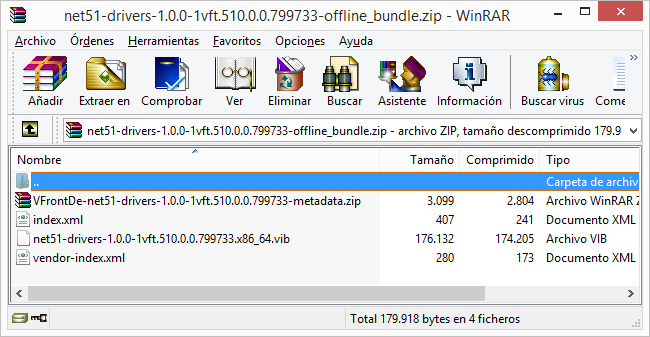
VMware ESXi drivers for the Fusion-io VSL 3.2.6 release have obtained VMware certification and are available This now includes support for ESXi 5.5. Log in to Reply Joe on December 14, 2013 at 7:50 am said. The problem is that the ne1000 driver, which is bundled in ESXi 7.0, is not compatible with the NUCs Gigabit Network interface. When you now try to install the latest ESXi patch, the driver is overwritten with the non-working default ne1000 driver. The solution is quite simple. Install: Download drivers from VMware. Extract the contents of the async driver zip file. Identify the offline-bundle.zip file(s). Extract the contents of the offline-bundle.zip file(s). Identify the async-driver.vib file(s). Log in to the ESXi host using the vSphere Client with administrator privileges, such as root.
I had to update the network adapter and the raid controller drivers
Before you start:
- Check / Enable SSH using vSphere client:
- Select the host, click the Configuration tab, and click Security Profile in the Software panel.
- In the Services section, click Properties.
- Select ESXi Shell and click Options
- Change the ESXi Shell options (Start/Start and stop with host).
- OK.


- Check full datastore path:
- Log in as root to the ESXi console through SSH.
- Run esxcli storage filesystem list
- Identify the datastore you are going to use for your drivers and record the mount point path ( I am using the ISO datastore so /vmfs/volumes/4e024984-a6c3ca91-a8bf-b499baa912d9 is what I need):
Esxi Install Driver Cli
Install:
Free Driver Installer
- Download drivers from VMware.
- Extract the contents of the async driver zip file.
- Identify the
offline-bundle.zipfile(s). - Extract the contents of the
offline-bundle.zipfile(s). - Identify the
async-driver.vibfile(s). - Log in to the ESXi host using the vSphere Client with administrator privileges, such as root.
- Using Datastore Browser, upload the
async-driver.vibfile(s) to an ESXi host’s datastore. - Enter the host into maintenance mode. (This means either shutting down or migrating all VMs on that host.)
- Log in as root to the ESXi console through SSH.
- Run this command to install drivers from the VIB file:
esxcli software vib install –v /path/async-driver.vibFor example: esxcli software vib install -v /vmfs/volumes/55a47a7f-11c62c90-711e-d8b190a2deb2/LSI_bootbank_scsi-megaraid-sas_6.606.06.00- - Restart the ESXi host.
- To confirm if the VIB is installed successfully, run this command to check the version:
esxcli software vib list | grep -i vib_name
For example: vib list | grep -i scsi-megaraid-sas - Exit maintenance mode.